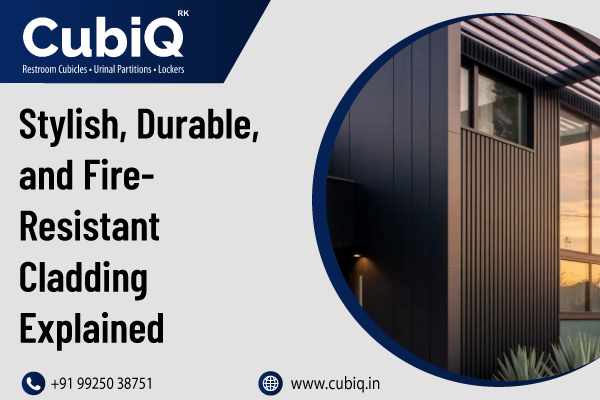
In the world of modern architecture, cladding is not just about aesthetics — it’s a critical part of building performance. Today, property owners and architects are increasingly choosing stylish, durable, and fire-resistant cladding to enhance safety, longevity, and visual appeal. Cladding transforms plain walls into design statements while providing functional protection from the elements, moisture, and fire. At CubiQ, our expertise in exterior claddings ensures that you get facade solutions that look good, last long, and meet high safety standards.
What Is Cladding and Why It Matters
Cladding refers to the layer of material attached to a building’s exterior walls. It acts as a protective skin — guarding against rain, wind, UV rays, and temperature fluctuations. Moreover, good cladding can significantly improve a building’s thermal insulation, reduce energy costs, and elevate its architectural character.
Types of Cladding Materials: A Breakdown
High-Pressure Laminate (HPL) / Compact Laminate
-
- Compact laminate panels are made by pressing decorative papers and core layers under high heat and pressure. These panels are dense, non-porous, and can be engineered to have fire-retardant properties.
- For example, Samrat’s exterior HPL has fire-retardant grades and resists UV, moisture, and temperature fluctuations.
- Merino’s compact laminate cladding also comes in flame-retardant versions.
Why Fire-Resistant Cladding Is Essential
- Safety First: Buildings equipped with fire-resistant cladding slow down the spread of flames, giving occupants more time to evacuate and firefighters more time to act. Panels rated for fire performance (such as FR-grade HPL or mineral-filled ACP) are crucial.
- Code Compliance: Many building codes now mandate cladding materials with specific fire ratings. Choosing compliant materials avoids regulatory issues.
- Long-Term Durability: Fire-resistant cladding often uses engineered resins and stable core materials that also resist moisture, UV damage, and wear. For example, compact laminate panels are non-porous and impact resistant.
- Aesthetic Flexibility: Thanks to modern manufacturing, fire-retardant claddings come in a variety of finishes, textures, and sizes — from wood-grain laminates to sleek metals.
How Fire-Resistant Cladding Works
Cladding materials resist fire in different ways depending on their construction:
- Fire-Retardant HPL: Uses phenolic or melamine resins mixed with flame-retardant additives. These panels can achieve fire ratings like B-s1 d0 under EN 13501-1.
- Mineral-Filled ACP: The core is filled with mineral materials (such as magnesium hydroxide) which are non-combustible, slowing down ignition and heat release.
- Fiber Cement: The cement-based composition resists direct combustion, making it inherently more fireproof.
- Sandwich Panels with Mineral Core: Use mineral wool or other fire-resistant materials as the core, sandwiched between strong outer sheets.
Designing With Stylish & Fire-Resistant Cladding
Modern architecture demands more than just utility. Here’s how designers can marry style and safety using fire-resistant cladding:
- Color and Finish Options
- Fire-resistant HPL comes in a wide palette — from natural wood grains to solid modern colors.
- ACP panels can have custom finishes, metallic looks, or high gloss, without compromising fire performance.
- Panel Dimensions & Format
- Compact laminate panels are available in various sizes (for example, 1220 × 2440 mm or larger) and thicknesses (3 mm to 12 mm or more), offering flexibility in facade design.
- ACP and sandwich panels also come in custom formats and modular designs, making installation faster and design more flexible.
- Mounting Systems
- Dry-hanging systems (rainscreens) allow cladding to be fixed to substructures, creating an air gap behind the cladding which improves thermal performance and prevents moisture build-up.
- Using proper fixings (non-combustible brackets, fire-rated anchors) helps maintain both aesthetics and safety.
- Sustainability and Maintenance
- Many fire-retardant cladding materials are recyclable. For instance, ACPs use aluminum, which can be recycled.
- Compact laminate panels are non-porous, which reduces water absorption and microbial growth.
- Fire-resist materials also contribute to longer building lifespans, reducing need for frequent replacements.
Typical Applications & Use Cases
Buildings that particularly benefit from stylish, durable, fire-resistant cladding include:
- High-rise commercial towers: Where fire safety is a top priority and facade design is a major brand signal.
- Educational institutions: Classrooms, lecture halls, and external facades demand safe materials that also look modern.
- Healthcare facilities: Hospitals need cladding that resists flames and is hygienic — compact HPL with fire-retardant grade is a strong fit.
- Public infrastructure: Airports, malls, government buildings — fire-resistant cladding can help meet regulatory demands and aesthetic goals.
- Residential projects: Contemporary homes and apartments can achieve both elegance and safety by choosing cladding like FR HPL or mineral-filled ACP.
Maintenance and Longevity: What to Expect
Once cladding is installed, the maintenance burden should be minimal — yet effective. Here’s what makes fire-resistant cladding last:
- Cleaning: Compact HPL panels don’t absorb water and resist grime; routine cleaning with mild detergent keeps them looking fresh.
- Inspection: Periodic checks of fixings, sealants, and joints help identify wear before it becomes a problem.
- Repair: High-quality cladding systems make it possible to replace just a few panels if needed, rather than doing a full façade overhaul.
- Durability: Fire-retardant cladding is engineered to resist UV, heat, and moisture. Combined with corrosion-resistant hardware, it can last for decades.
Why Choose Us
At CubiQ, we provide superior exterior cladding solutions that meet the highest standards of quality, durability, and fire safety. As one of the leading cladding manufacturers in Ahmedabad, we take pride in our attention to detail and commitment to delivering products that not only enhance the aesthetic appeal of your building but also ensure its long-term protection. Our expert team is always ready to assist you with design recommendations, material selection, and custom solutions tailored to your specific requirements. When you choose CubiQ, you are investing in quality, safety, and style for your property.
Conclusion
Stylish, durable, and fire-resistant cladding is not just a design trend — it’s a building necessity in today’s world. Cladding systems like compact HPL, fire-rated ACP, fiber cement, and sandwich panels bring together safety, longevity, and architectural beauty. When thoughtfully selected and professionally installed, these materials enhance both the visual appeal and performance of any building.
At CubiQ, we specialize in delivering exterior cladding solutions that go beyond aesthetics — we deliver safety, innovation, and lasting value. By partnering with us, you can trust that your building’s fade will reflect your vision while meeting the highest standards of fire performance and durability.
For more information about our fire-resistant cladding options or to discuss your project, contact CubiQ today! Call us at +91 99250 38751 or email us at info@cubiq.in.
FAQs
What materials are used in stylish, durable, and fire-resistant cladding?
Common materials include HPL, metal (aluminum, stainless steel), treated wood, and stone. Each offers a combination of aesthetic appeal, durability, and fire resistance.
Can I customize the look of my exterior cladding?
Yes, CubiQ offers customizable options in terms of colors, finishes, and textures to meet your design preferences and project requirements.
How long does fire-resistant cladding last?
The lifespan of fire-resistant cladding can vary depending on the material used and environmental conditions. However, CubiQ’s cladding solutions are designed for long-term durability, often lasting for decades with minimal maintenance.
Is fire-resistant cladding more expensive than regular cladding?
- While fire-resistant cladding may have a higher initial cost, it provides long-term value by ensuring safety, reducing maintenance costs, and offering greater durability.