Introduction
A false ceiling, also known as a dropped or suspended ceiling, is a supplementary ceiling constructed beneath the main roof. It enhances the overall look of any room while offering practical benefits. False ceilings help hide electrical wires, ducts, and pipes, creating a clean, clutter-free space. They also improve acoustics, reduce noise, and boost energy efficiency by acting as an insulator. With various materials like gypsum, POP, wood, or metal, homeowners can choose styles that match their interiors. From living rooms to bedrooms, false ceilings add elegance, comfort, and value. If you’re designing or renovating your home, a false ceiling is a smart choice to improve aesthetics and functionality while creating a more modern, polished environment.
What is a False Ceiling?
A false ceiling, also known as a dropped or suspended ceiling, is a secondary layer installed below the main ceiling. Made from materials like gypsum, POP, PVC, metal, or wood, it enhances both functionality and aesthetics. The space between the original ceiling and the false ceiling conceals wiring, lighting fixtures, and air conditioning ducts, giving a neat and modern appearance. False ceilings also offer benefits like improved insulation, better acoustics, and energy efficiency. Available in various designs and finishes, they add style and elegance to homes, offices, showrooms, and commercial spaces. Whether for decoration or practical use, false ceilings are a popular choice in modern interior design.
Types of False Ceilings
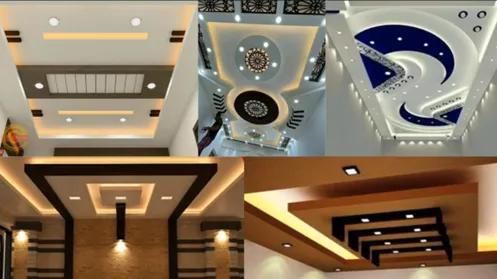
- POP (Plaster of Paris) Ceilings: Popular for their smooth finish and versatility in design. Ideal for intricate patterns.
- Gypsum Ceilings: Lightweight and easy to install, offering a clean, modern look.
- Wooden Ceilings: Offer a warm, rustic feel and are often used in living rooms and bedrooms.
- Metal Ceilings: Durable and commonly used in commercial buildings.
- PVC Ceilings: Affordable and resistant to moisture, perfect for use in kitchens and bathrooms.
Benefits of False Ceilings
- Aesthetic Appeal: False ceilings add depth, dimension, and style to your home, making rooms feel more refined.
- Insulation: They help regulate temperature by reducing heat during summer and retaining warmth in winter.
- Soundproofing: The additional layer can help reduce external noise and improve acoustics.
- Lighting Options: Recessed lights, LED strips, and cove lighting can be easily incorporated.
Design Examples
- Modern Designs: Clean lines with built-in lighting for a minimalist look.
- Classic Designs: Elegant patterns with traditional moldings.
- Minimalist Styles: Subtle textures and neutral colors that blend with the overall theme.
Why You Should Consider a False Ceiling for Your Home
- Enhanced Aesthetic Appeal: False ceilings can completely transform the look of a room. Whether you’re aiming for a luxurious finish or a sleek modern vibe, they add elegance and style, allowing experimentation with textures, colors, and lighting.
- Improved Insulation and Energy Efficiency: The extra ceiling layer helps regulate indoor temperature, lowering energy consumption and making your home more eco-friendly.
- Soundproofing Benefits: Ideal for noisy surroundings or multi-level homes, false ceilings reduce sound transmission and enhance privacy.
- Variety in Design Options: With flexible materials and finishes, you can customize the ceiling to suit your interior style or create dramatic effects.
- Cost-Effectiveness: Though initially costlier, false ceilings are a smart long-term investment. They help with energy savings, conceal wiring/ducts, and increase home value.
Considerations Before Installing a False Ceiling
- Budget Considerations: The cost depends on the material used, design complexity, and installation charges. Gypsum and PVC are usually more affordable, while wooden and metal ceilings can be more expensive.
- Structural Considerations: Your home must be able to support the additional load. Consult a professional to ensure the existing structure can handle the installation safely.
- Maintenance and Cleaning Requirements: False ceilings require occasional dusting and cleaning, especially if you opt for intricate designs. Choosing moisture-resistant materials can also reduce the need for frequent upkeep.
- Hiring Professionals: Always work with experienced contractors to ensure quality work. Poor installation can lead to sagging, cracking, or inefficient use of space.
The CubiQ Difference
CubiQ is the leading False Ceiling manufacturer in Ahmedabad, India, known for delivering top-quality solutions that blend aesthetics with performance. We specialize in modern false ceiling designs that elevate the visual appeal of homes, offices, showrooms, and commercial spaces. Our ceilings are crafted using high-grade materials like gypsum, POP, metal, and PVC, ensuring durability, insulation, and long-term value. At CubiQ, we offer a wide range of styles from sleek minimalist looks to luxurious layered designs that suit both traditional and modern interiors. Each ceiling system is designed to hide wiring, improve acoustics, regulate temperature, and enhance lighting placement. Our expert team helps you choose the perfect design based on your needs, space, and budget.
Whether you’re remodeling a single room or designing an entire building, our solutions offer seamless finishes and functional benefits. With timely delivery, customized designs, and expert support, CubiQ stands out as the trusted False Ceiling manufacturer in India.
Conclusion
False ceilings are not just about visual appeal; they improve your home’s comfort, efficiency, and functionality. From better lighting to noise control and energy savings, the benefits are plenty. Whether you’re renovating or building a new home, incorporating a false ceiling can elevate your interiors and offer long-lasting value.
Ready to transform your home? Contact us today for expert consultation and explore the best in modern false ceiling solutions. Call Us: +91 99241 32951 or email:info@cubiq.in.
FAQ’s
Why should I install a false ceiling at home?
False ceilings enhance the visual appeal of your home, improve lighting, reduce energy bills through insulation, and offer soundproofing benefits. They also conceal wires and pipes for a cleaner, more organized appearance in every room.
What materials are used in false ceilings?
POP (Plaster of Paris), gypsum boards, PVC, wood, and metal are some of the most used false ceiling materials. Each material offers different looks, durability, and insulation properties to suit various room types and design needs.
Does a false ceiling reduce room temperature?
Yes, false ceilings help lower room temperature by reducing heat transfer from the roof. They provide thermal insulation, making rooms cooler in summer and reducing the load on air conditioning systems for better energy efficiency.
Are false ceilings good for soundproofing?
False ceilings can reduce noise levels by absorbing sound, especially in rooms with high ceilings or an echo. When paired with acoustic insulation materials, they significantly improve soundproofing in bedrooms, home theaters, or workspaces.
How much does a false ceiling cost in India?
False ceiling costs in India vary based on material, design complexity, and area size. The typical cost is between ₹70 and ₹150 per square foot. Custom designs, lighting, and finishes can increase the overall price.
Can false ceilings be customized?
Yes, false ceilings can be customized in design, shape, and lighting layout. Homeowners can choose between modern, classic, or minimalist styles, adding cove lighting, textures, and patterns to match interior decor preferences.
Is false ceiling appropriate for smaller rooms?
False ceilings work well in small rooms if designed properly. Shallow designs and light colors can create a sense of space and enhance lighting without making the room feel cramped or lowering the ceiling too much.
What are the maintenance tips for false ceilings?
Clean false ceilings regularly using a soft cloth or vacuum. Inspect for moisture or cracks. Avoid hanging heavy objects from them. For gypsum or POP ceilings, ensure the area is moisture-free to prevent long-term damage.
Who should install a false ceiling?
Always hire professional contractors or interior designers to install false ceilings. Experts ensure proper measurements, safety, wiring integration, and durability while achieving the desired aesthetic with minimal maintenance issues.