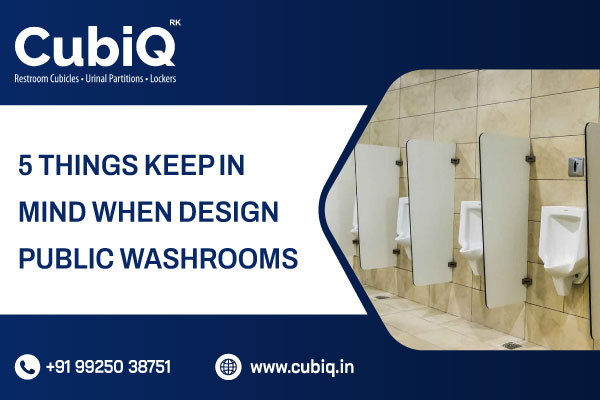
Public washrooms are small spaces with big consequences. When designed well, they feel clean, intuitive, and welcoming; when designed poorly, they cause queues, mess, odours, risks, and bad impressions across malls, offices, airports, schools, hospitals, and stadiums. Keep the five essentials in focus. First, accessibility: step-free entries, adequate turning space, grab bars, clear signage, and fixtures within reach help everyone, including people with disabilities. Second, hygiene: touchless taps and flushes, easy-to-clean materials, smart drainage, and robust ventilation keep germs and smells at bay. Third, privacy and comfort: solid partitions, reliable locks, acoustic control, shelves, hooks, and flattering lighting reduce stress. Fourth, sustainability: Low-flow fixtures, LED lighting, long-lasting low-VOC coatings, and easy maintenance access save resource consumption and expenses. Fifth, user experience: logical layouts, slip-resistant floors, adequate lighting, clear wayfinding, and space for parents and caregivers keep traffic moving and users satisfied. Get these right and you’ll improve cleanliness, safety, and lifetime value.
Accessibility is Key
A restroom must be accessible to everyone, including children, elders, parents using strollers, those with temporary injuries, and persons with impairments. Accessibility isn’t an add-on; it’s the foundation.
Core principles
- Step-free access: Provide ramps or level entries with slip-resistant flooring. Avoid thresholds and sharp transitions.
- Doorways and circulation: Use door widths that comfortably allow wheelchair access and a clear turning radius inside (aim for a diameter of 1,500 mm where possible).
- Reach ranges: Mount accessories—soap dispensers, dryers, paper holders, flush plates, coat hooks, and shelves—within comfortable reach for seated and standing users.
- Grab bars and support rails: Install solid rails around toilets and urinals in accessible and ambulant cubicles. Position and anchoring matter—follow best-practice height and offset.
- Accessible fixtures: Select comfort-height pans, lever or sensor tap devices, and properly positioned mirrors.
- Family needs: Include a family/assisted washroom with a changing table, child seat, pram space, and a shelf for bags and phones.
- Wayfinding: Use clear, high-contrast pictograms and Braille/tactile signage at consistent heights. Mark accessible routes from lobbies and lifts.
- Privacy & autonomy: Make sure the locks are straightforward to use, the doors do not self-trap, and an emergency release is available.
Pro tip: Design for ambulant users as well—slightly wider cubicles with vertical grab bars aid those who don’t use a wheelchair but need stability.
Hygiene and Cleanliness
Hygiene starts with design. The easier a washroom is to clean and the fewer germ-transfer points it offers, the cleaner it will remain throughout the day.
Design choices that promote hygiene
- Touchless everything: Sensor taps, soap dispensers, flush plates, hand dryers or towel dispensers, and automated doors where feasible.
- Easy-to-clean materials: Compact laminate/HPL panels, solid surfaces, ceramic tiling with epoxy grout, and coved skirtings to remove dirt traps. Favour seamless junctions.
- Smart layouts: Keep “wet” and “dry” zones separate. Slope flooring lead to floor drains away from circulation routes. Provide splash guards at basins.
- Air quality: Strong, quiet ventilation with continuous or demand-controlled extraction to reduce odours and humidity. Plan supply air so it doesn’t blow water back onto users.
- Hand-washing flow: Place soap, water, and drying within a single reach zone to prevent drips across the floor. Add shelves for phones and bags near basins.
- Waste management: Provide marked, easy-to-reach bins (including sanitary bins) with service access that doesn’t disturb users.
- Cleaning access: Build in janitor closets nearby with water points, hose bibs, and storage. Ensure surfaces withstand frequent cleaning agents.
Pro tip: Put inspection hatches where valves and traps need service. Hidden access reduces clutter while enabling quick maintenance.
Privacy and Comfort
No one relaxes in a washroom that feels exposed or noisy. Privacy is both visible and audio, with comfort following.
Elements that enhance privacy and comfort
- Full-height or near-full-height partitions: Reduce sightlines and sound bleed. Minimise door gaps with quality hardware and rebated edges.
- Reliable locks with occupancy indicators: Clear red/green indicators reduce awkward knocks and improve traffic flow.
- Acoustic control: Denser walls, sealed perimeters, and soft finishes should be used whenever practical to prevent echo and cross-stall noise.
- Ventilation & odour control: Quick air changes, discreet fragrance where appropriate, and materials that don’t absorb odours.
- Lighting: Provide bright, uniform lighting (300–500 lux). Use warmer tones around mirrors to flatter skin tones and avoid glare.
- Thermal comfort: Avoid drafts at hand-washing areas; keep temperatures steady. Heated mirrors or anti-fog treatments can help in humid climates.
- Amenity details: Hooks that hold a full bag, shelves for phones, baby-changing stations, vanity counters, and shave/makeup mirrors. These small features dramatically improve user satisfaction.
Pro tip: Consider unisex single-occupancy rooms (with excellent privacy) to reduce queues and serve diverse user needs.
Sustainability and Eco-Friendly Design
Washrooms offer some of the easiest wins in water and energy conservation, without sacrificing performance.
Eco-friendly choices that pay back
- Water efficiency: Dual-flush WCs (e.g., 3/6 L), low-flow taps (≈1.9–3.8 L/min with aerators), and efficient urinals (including waterless models where appropriate).
- Smart controls: Sensors and thermostatic mixers reduce waste. Timed shut-offs on taps and shower controls in gym facilities.
- Energy-efficient lighting: LEDs with occupancy sensors and daylight integration near external walls or skylights.
- Sustainable materials: Recycled content, FSC-certified wood alternatives, and low-VOC adhesives and sealants. Choose durable finishes to minimise replacement cycles.
- Air & water quality: Specify products with third-party certifications (e.g., EPDs, low-VOC labels) and fit filtration/softening where local water quality causes scaling.
- Waste reduction: Hand dryers with HEPA filtration or responsibly sourced paper towels with high-capacity dispensers and recycling where feasible.
- Future-proofing: Plan chases and voids for easy retrofits of smarter fixtures later, keeping the space relevant and efficient over time.
Pro tip: If the site supports it, consider greywater reuse for WC flushing or landscape irrigation.
User Experience
Think like a first-time visitor. Is the restroom easily accessible, fast to use, and pleasant from entry to exit?
Design for intuitive use
- Clear wayfinding: Consistent icons, directional signs, and location markers from main circulation routes. Add signage for accessible and family rooms.
- Logical layout: Keep entrances prominent but out of direct view of booths. Place hand-washing near exits to support hygiene routines.
- Queue management: Provide enough fixtures for peak loads. Consider shared wash areas with individual stalls to shorten lines.
- Mirrors and counters: Full-height mirrors plus focused grooming zones. Keep counters clutter-free with integrated dispensers.
- Resupply strategy: Storage for consumables near the wash area reduces downtime. Plan staff routes for quiet, quick servicing.
- Safety and security: Anti-slip floors (appropriate R-rating), rounded edges, anti-ligature fittings where needed, and robust hardware to withstand heavy use.
- Feedback loops: Subtle QR tags or feedback devices (where applicable) allow maintenance personnel to reply more quickly.
Pro tip: Add small hospitality touches: a ledge for bottles near basins, motion-activated night lighting, and noise-reducing soft-close hardware.
Common pitfalls to avoid
- Narrow entries and tight layouts that prevent wheelchair turning or stroller maneuvering.
- Inadequate ventilation leading to odours, condensation, and mould.
- Too few fixtures relative to peak demand, creating long queues.
- Glossy, slippery floors that increase fall risk when wet.
- Poor lighting and dark corners that feel unsafe.
- Gap-heavy partitions and weak locks that undermine privacy and invite vandalism.
- Fixtures are placed out of reach for seated users or children.
- There was no preparation for cleaning logistics, resulting in overflowing bins and empty dispensers.
Maintenance matters
A great design fails without a maintenance plan. Create a checklist that includes:
- Scheduled cleaning cycles matched to traffic patterns.
- Dispensers, bins, locks, and flush systems are all inspected on a daily basis.
- Weekly checks of ventilation, sensors, and water temperatures.
- Monthly review of sealants, grout, and partition hardware.
- Rapid-response protocols for leaks, clogs, or broken fittings.
Durable finishes and service access are built in, allowing crews to complete their tasks swiftly and without disturbing users.
Why Choose CubiQ for Public Washrooms?
Choose CubiQ when you need Public Washrooms that are reliable, hygienic, and easy to maintain. As a seasoned Public Washroom Manufacturer, the team builds washroom systems with premium wall panels in many designs, so your space looks smart and stays strong. Materials are eco-friendly and meet strict international standards, while sturdy hardware and precise fit-and-finish deliver real privacy and long service life. Fast installation reduces downtime, and smooth, easy-clean surfaces support daily hygiene. Layout options include accessible cubicles, family rooms, and smart storage for supplies, helping traffic flow better and reducing queues. Water-saving faucets, low-flow WCs, and energy-efficient lighting lower running costs without sacrificing comfort. As a trusted restroom cubicle manufacturer, the company offers coordinated partitions, doors, and fittings that resist moisture, impact, and heavy use in malls, offices, schools, hospitals, airports, and stadiums. Expert design help and dependable after-sales support keep everything working as planned—today and years from now.
Conclusion
Well-designed public washrooms protect health, dignity, and the reputation of any facility. Prioritise accessibility so every person can use the space independently. Engineer hygiene with touchless fixtures, cleanable surfaces, smart layouts, and robust ventilation. Deliver privacy and comfort through solid partitions, reliable locks, good acoustics, and thoughtful amenities. Embed sustainability to save water and energy while choosing low-impact, long-life materials. Finally, design for user experience—clear wayfinding, safe movement, intuitive fixtures, and quick maintenance access.
Getting these five areas right reduces operating costs, shortens queues, improves cleanliness, and leaves users feeling cared for. For guidance, products, and specifications—and to discuss public restroom design requirements—call +91 99241 32951, or email info@cubiq.in. You can also fill out the Contact Form, and the team will respond at the earliest.
FAQ
Which hygiene features should be prioritized?
Prioritize touchless taps, soap dispensers, and flush plates to limit germ transfer. Specify easy-to-clean, non-porous surfaces, coved skirtings, and epoxy grout. Develop distinct damp and dry zones, slope floors to drains, and add enough ventilation. Provide storage for supplies and waste.
How can privacy be improved inside cubicles?
Use full-height or near-full-height cubicles with rebated edges to minimize gaps. Fit reliable locks with occupancy indicators, and select denser partitions to reduce noise. Provide generous entry lobbies that shield sightlines. Include shelves and hooks so belongings stay off the floors.
What sustainable choices matter most in washrooms?
Choose dual-flush WCs, low-flow taps with aerators, and efficient hand-drying solutions. Specify LEDs with occupancy sensors and daylighting where possible. Prefer durable, low-VOC, recycled, or recyclable materials. Plan service access for renovations, and think about using greywater for flushing or irrigation.
How do layouts improve overall user experience?
Organize clear circulation: entrances that don’t expose cubicles, logical fixture placement, and separate queuing areas. Keep soap, water, and drying within one reach zone to prevent drips. Use non-slip flooring, ample lighting, and legible signage so first-time users navigate confidently.
What materials deliver durability and easy maintenance?
Select compact laminate or HPL for partitions, solid-surface or ceramic for vanities, and epoxy-grouted tiles or resin floors for longevity. Specify corrosion-resistant hardware, sealed edges, and moisture-proof cores. Durable finishes reduce vandalism, simplify cleaning, and extend maintenance cycles, lowering costs.
How can ventilation be optimized for comfort and hygiene?
Provide continuous or demand-controlled extraction sized for peak loads. Balance supply air to avoid drafts at basins and stalls. Use fans and concealed ducting to reduce noise. Monitor humidity to avoid condensation, mold, and odors, therefore conserving finishes and occupant comfort.
What maintenance practices keep washrooms efficient?
Create scheduled cleaning tied to footfall, with quick checks for soap, paper, bins, and leaks. Provide janitor closets near entrances. Use vandal-resistant hardware and accessible service panels. Track issues via QR codes or apps to speed repairs and reduce downtime.
How many fixtures should be planned for peak demand?
Size fixture counts for peak periods, not averages. Analyse occupant loads, event schedules, and gender balance; consider unisex single-occupancy rooms to flex capacity. Provide hand-washing stations to prevent bottlenecks. Align layout with local codes while prioritising flow and cleaning access.
Which small details boost user satisfaction?
Add shelves and hooks in each cubicle, bag ledges at basins, and child seats in family rooms. Use mirror demisters, soft-close hardware, and anti-slip mats where needed. Provide clear occupancy indicators and refill routines so spaces feel cared-for and dependable.